

Beyond Forex and Futures: Are Prediction Markets and Perpetuals the Next Frontier for Prop Trading?
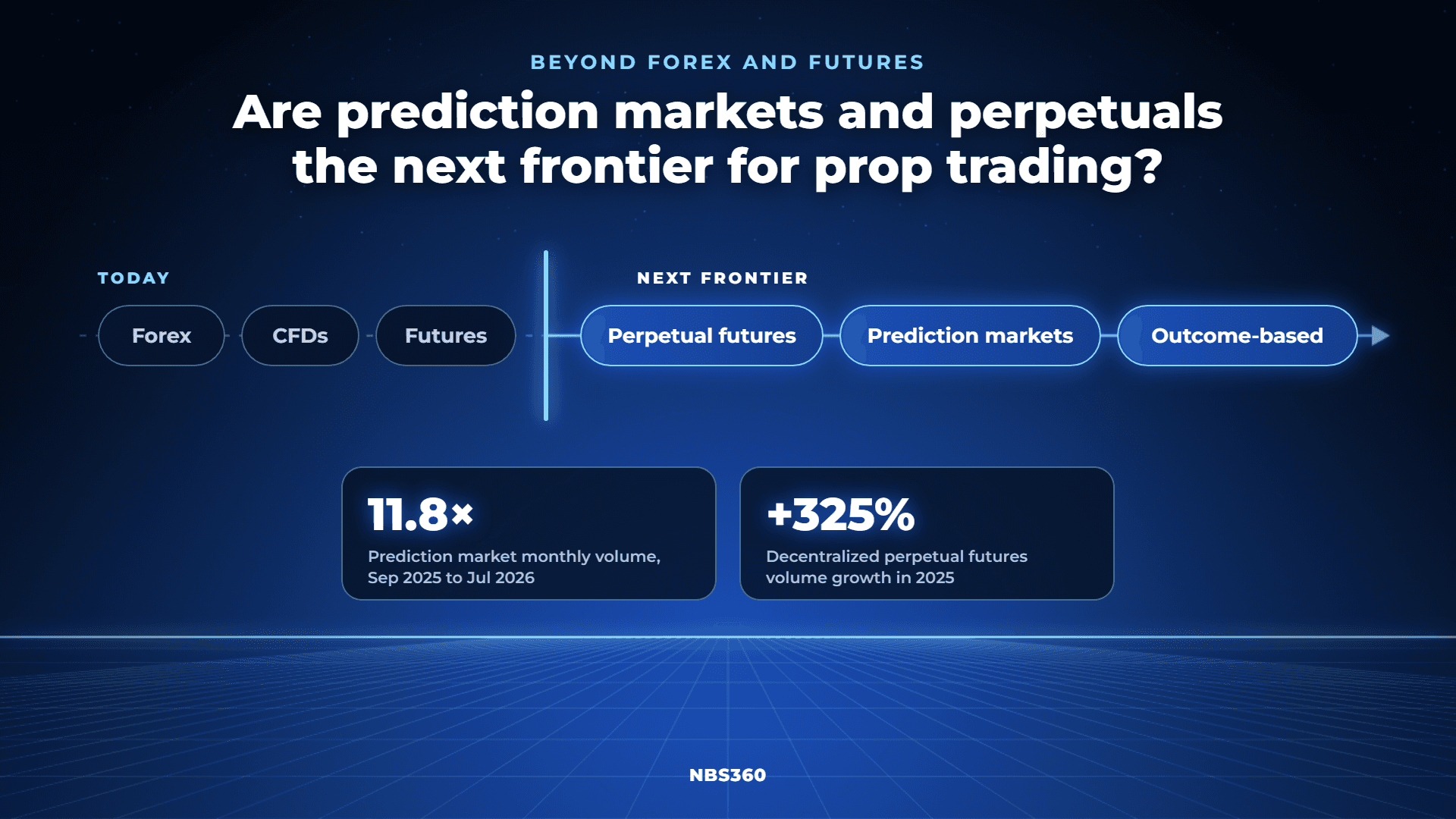
The proprietary trading industry is evolving beyond its traditional foundations. While Forex, CFDs and conventional futures continue to dominate the retail prop trading landscape, emerging instruments such as perpetual futures and prediction markets are opening new opportunities for market expansion.
For prop firm operators looking at prediction markets, prop trading is at a turning point. This raises an important question: could alternative trading instruments become the industry's next major growth driver?
A rapidly expanding market
The growth of alternative trading markets is becoming increasingly difficult to ignore.
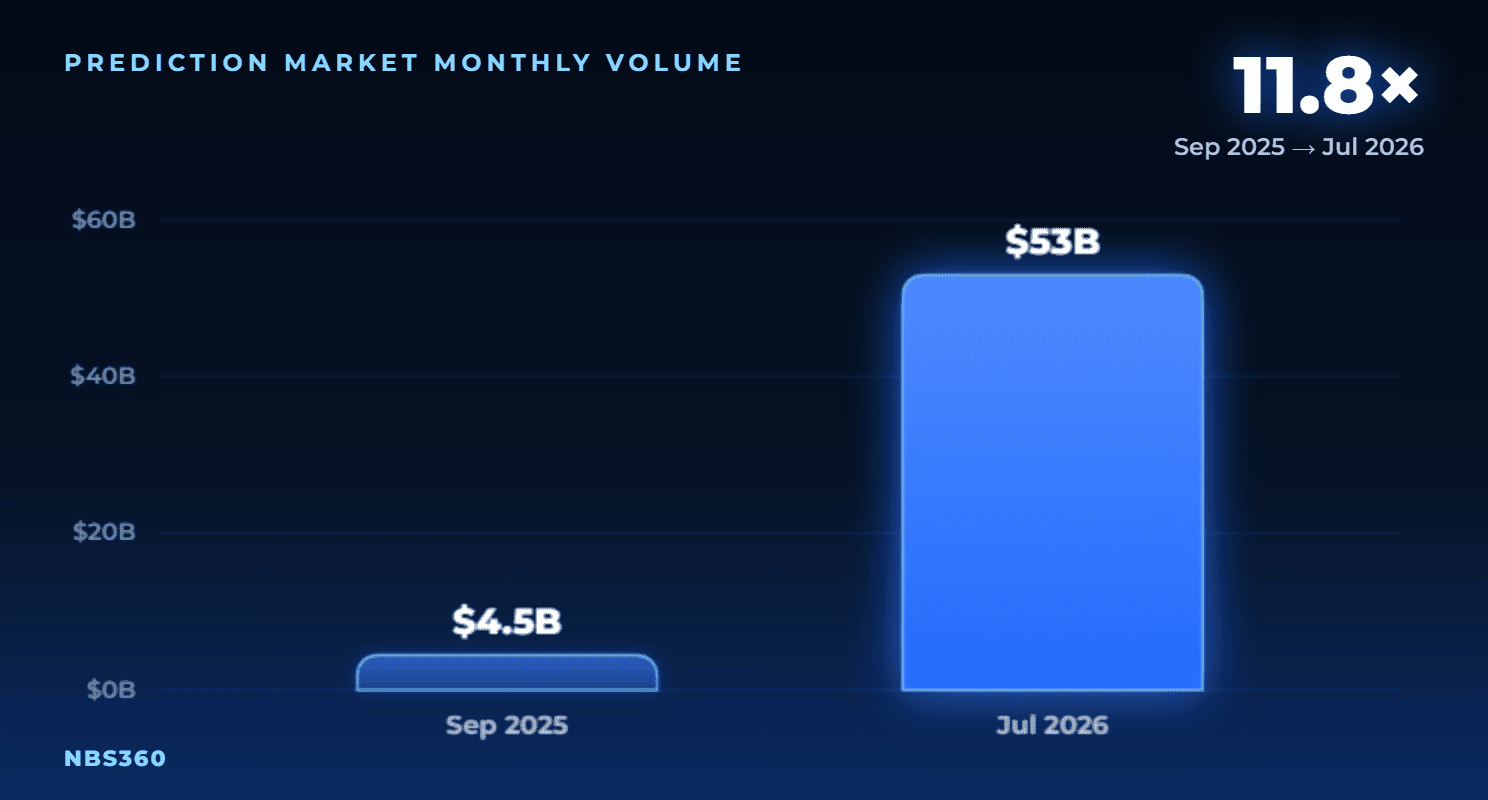
According to Pew Research Center, combined monthly trading volume across two major prediction market platforms increased from approximately $4.5 billion in September 2025 to $53 billion in July 2026, with sports-related contracts contributing significantly to this expansion.
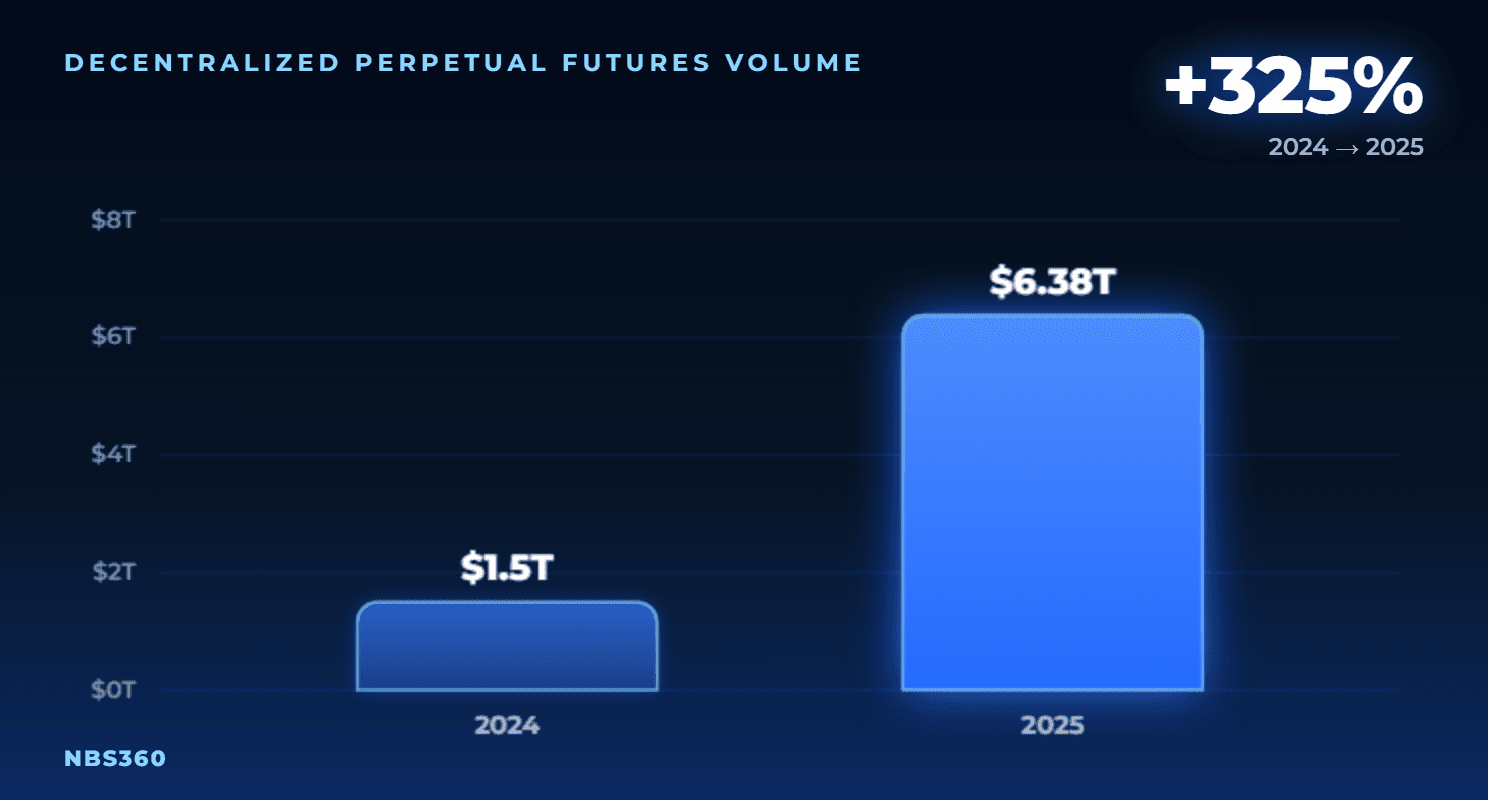
Meanwhile, CoinGecko reported that decentralized perpetual futures trading volume grew from $1.5 trillion in 2024 to $6.38 trillion in 2025, representing an increase of approximately 325%.
Although these figures reflect the broader financial markets rather than prop trading specifically, they highlight the scale of emerging trading products and their potential relevance to proprietary trading businesses.
Beyond traditional trading instruments
Three emerging product categories are particularly relevant to the future of prop trading:
- Perpetual futures: Derivative contracts without a fixed expiration date, offering exposure to cryptocurrencies and an expanding range of other assets.
- Prediction markets: Contracts that allow participants to trade on the probability of specific financial, economic or real-world events.
- Outcome-based trading: Short-duration products that allow participants to speculate on predefined price outcomes, sometimes within trading windows as short as five minutes.
While these products differ in structure and regulatory treatment, they demonstrate a broader shift towards more diverse, accessible and flexible trading experiences.
Reaching a new generation of traders
One of the biggest opportunities for prop firms is the potential to attract audiences beyond traditional Forex and futures traders.
Crypto-native traders, prediction market participants and users of mobile-first financial platforms represent potential new customer segments with different expectations.
They are often accustomed to continuous market access, simplified interfaces and faster trading experiences.
For prop firm operators, this could create opportunities to:
- Expand into new customer segments.
- Introduce alternative evaluation programmes.
- Diversify revenue streams.
- Reduce dependence on traditional trading markets.
- Differentiate their brand in an increasingly competitive industry.
However, attracting new audiences must be balanced with responsible product design, sustainable evaluation models and effective risk management.
Technology will drive the next stage of expansion
Introducing alternative trading instruments requires more than simply adding new assets to an existing trading platform.
Perpetual futures and prediction markets introduce different pricing mechanisms, settlement processes and risk profiles.
Prop firms exploring these markets will need infrastructure capable of supporting:
- Real-time market data and pricing.
- Continuous, 24/7 risk monitoring.
- Funding rates and liquidation mechanisms.
- Event-based contract settlement.
- Flexible challenge and evaluation rules.
- Advanced trading behaviour analysis.
As the industry diversifies, the ability to manage multiple trading environments through one connected ecosystem could become a significant competitive advantage.
Regulation remains a key consideration
Innovation also brings regulatory challenges.
In February 2026, the European Securities and Markets Authority (ESMA) highlighted that certain products marketed as perpetual futures may fall under existing CFD product intervention measures.
Prediction markets and binary-style trading products face separate regulatory challenges, with restrictions varying across jurisdictions.
Prop firms must carefully assess their operating models, target markets and legal obligations before introducing new products, particularly when distinguishing between simulated trading and live market execution.
Is the future of prop trading multi-market?
The retail prop trading industry has already evolved from traditional Forex-focused programmes to a broader ecosystem that includes futures and cryptocurrency trading.
Perpetual futures, prediction markets and outcome-based trading could represent the next chapter in this evolution.
While industry-wide data on prop-specific adoption remains limited, the expansion of these markets signals an opportunity worth monitoring.
At NBS360, we believe that adaptable technology, connected infrastructure and effective risk management will remain fundamental as proprietary trading businesses explore new markets and business models.
The next generation of prop firms may not be defined by the markets they serve today, but by their ability to adapt to the markets of tomorrow.
Sources:
- Pew Research Center – Prediction Market Trading Volume
- CoinGecko – State of Crypto Perpetuals Report 2026
- ESMA – Perpetual Futures and CFD Product Intervention Measures