

Who Is Going to Lead the Prop Industry? Regulators, Prop Firms or Brokerages?
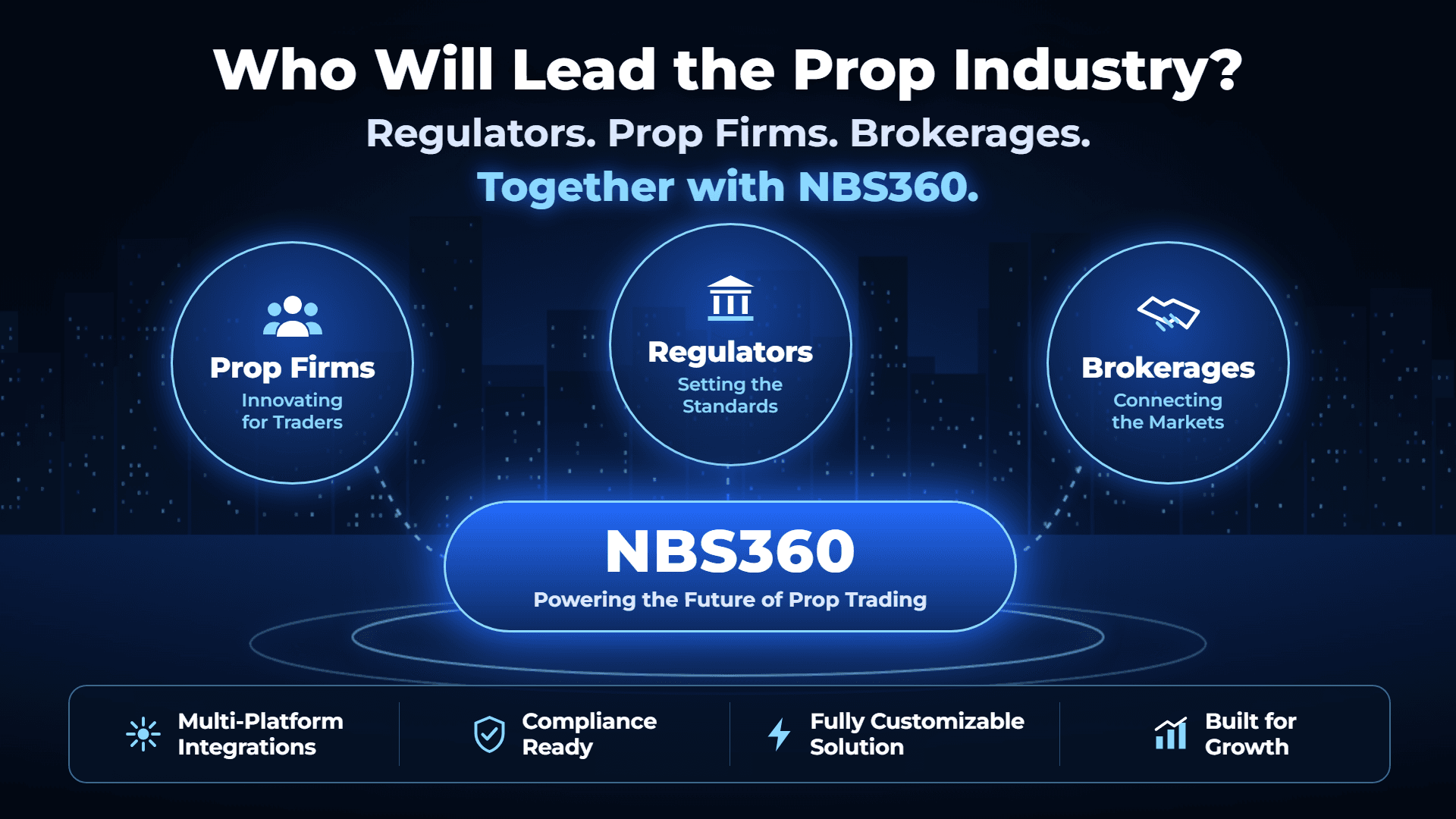
The prop trading industry is entering a new phase. The question is no longer simply who can attract the most traders or sell the most challenges. It is becoming a question of who will shape the industry's future: regulators, prop firms or brokerages?
All three have a role to play. But they bring different strengths, priorities and risks.
1. Regulators: Setting the Boundaries
For years, the regulatory position of evaluation-based prop firms has remained unclear across many markets. In 2026, there is still no single global regulatory framework specifically designed for retail prop firms. However, existing financial services, consumer protection, advertising and AML requirements can still apply, depending on the business model and jurisdiction.
The direction is increasingly clear: greater scrutiny of how firms present their products, manage risk, communicate trading rules and handle payouts. In July 2026, the Financial Commission introduced a voluntary prop-firm certification framework focused on transparent rules, fair enforcement, responsible risk management and independent dispute resolution. This is an example of the industry moving towards higher standards even before comprehensive regulation arrives.
Advantages: Greater trust, clearer standards, stronger consumer protection and a more sustainable market.
Challenges: Compliance costs, operational complexity, jurisdictional differences and the risk that poorly designed regulation could limit innovation.
Regulators may not build the products, but prop firm regulation will influence which business models can operate and where.
2. Prop Firms: Driving Innovation and Trader Demand
Prop firms created the retail prop-trading market as we know it. They introduced evaluation challenges, funded-account programmes, flexible trading rules and new ways for traders to access simulated capital and performance-based rewards.
Their next evolution is already visible. Some firms are expanding into new asset categories, including futures and crypto. Others are launching additional brands, developing their own platforms or moving towards brokerage ownership.
The latest State of Prop Trading 2026 report tracked 86 firms and 4,561 plans across futures, Forex/CFDs and crypto. It also found that 53 of the 86 firms changed a price, rule, plan or offer during the first eight days of its change log, a clear sign of a highly competitive and rapidly evolving market.
Advantages: Agility, direct access to trader communities, product innovation, brand differentiation and the ability to respond quickly to market demand.
Challenges: Dependence on external technology, platform providers and payment partners; reputational exposure; payout sustainability; and the growing cost of compliance and operations.
Prop firms understand the trader better than anyone. Their challenge is turning that understanding into reliable, scalable businesses.
3. Brokerages: Connecting Prop Trading to Traditional Markets
Brokerages are no longer just technology or liquidity partners in the prop ecosystem. They are becoming direct participants.
We are seeing movement in both directions: established brokers launching prop programmes, while prop firms establish or acquire brokerage businesses. Examples include ThinkMarkets entering the prop space through ThinkCapital, FTMO completing its acquisition of OANDA, and Topstep launching Topstep Brokerage in 2026.
For brokers, prop programmes offer access to new audiences and a potential path from evaluation customers to traditional brokerage clients. For prop firms, brokerage ownership can create new revenue channels and a route into regulated market infrastructure.
Advantages: Established market infrastructure, regulatory experience, execution capabilities, liquidity relationships and access to traditional trading customers.
Challenges: Higher capital and compliance requirements, more complex operations, potential conflicts of interest and the challenge of managing two different business models.
The opportunity is significant, but a brokerage licence does not automatically make every prop product regulated. The legal structure and activities of each entity still matter.
So, Who Will Lead?
The answer may be that none of these three players can lead the industry alone.
Regulators will establish the boundaries. Prop firms will continue to shape the products and trader experience. Brokerages will connect the ecosystem to traditional financial markets.
But there is another essential player: the prop technology provider.
As businesses expand across brands, asset classes, platforms and jurisdictions, technology becomes the infrastructure connecting these different parts. Providers like NBS360 help make that possible through integrated CRM, trading technology, payment solutions, risk management and multiple platform integrations, giving prop firms and brokers the flexibility to develop their own business models without being restricted by fragmented systems.
The future will not belong simply to the biggest prop firm, the most established broker or the strictest regulator.
It will belong to the businesses that can adapt, integrate and operate sustainably as the industry evolves.
NBS360: Powering the Future of Prop Trading.